

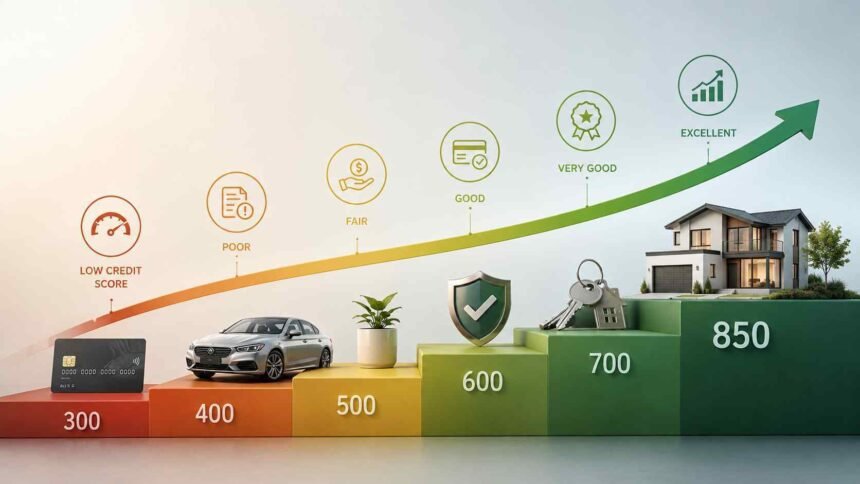
If you are wondering what is a good credit score, the short answer depends on the scoring model. For the commonly used FICO scoring system, a score of 670 to 739 is considered good. Scores from 740 to 799 are very good, while 800 to 850 are exceptional.
- What Is a Good Credit Score?
- Credit Score Ranges Explained: 300 to 850
- What Is a Fair Credit Score?
- What Is a Bad Credit Score?
- Is 600 a Good Credit Score?
- Is 650 a Good Credit Score?
- Is 700 a Good Credit Score?
- Is 750 a Good Credit Score?
- What Credit Score Is Needed to Buy a Car?
- What Is a Good Credit Score to Buy a House?
- What Factors Affect Your Credit Score?
- Why Your Credit Score Can Be Different From the One a Lender Uses
- How to Improve Your Credit Score
- Pay bills on time
- Keep credit card balances manageable
- Apply for credit selectively
- Check your credit reports
- Give your credit history time
- Does a Higher Credit Score Always Mean Better Terms?
- The Bottom Line
But there is more to a credit score than the number itself. A 700 score and a 750 score can both put you in a strong position, yet lenders may use different scoring models, and the score they see can vary depending on the type of credit you are applying for.
This guide explains the credit score range from 300 to 850, what each range generally means, whether 600, 650, 700, and 750 are good scores, and what kind of credit score may help when buying a car or a house.
What Is a Good Credit Score?
For a standard FICO score, 670 to 739 is considered good. A score of 740 to 799 is very good, and 800 or higher is exceptional. Scores below 670 fall into the fair or poor categories.
That makes 670 an important benchmark, but it is not a universal cutoff for every lender.
Credit scores are used to estimate the likelihood that a borrower will repay debt as agreed. Lenders can use them when evaluating applications for credit cards, auto loans, mortgages, and other forms of credit. Generally, a higher score can make it easier to qualify and may help a borrower receive better interest rates or terms.
However, your credit score is only part of a lending decision. Lenders may also consider your income, existing debt, credit history, assets, down payment, and other information.
Why “good” does not mean one specific number
There is no single credit score that guarantees approval or a particular interest rate.
You can also have several credit scores at the same time. Different lenders may use different scoring models, and models can be designed for different types of lending. As a result, the score you see from one source may not be exactly the score a lender uses.
So, rather than asking whether you have reached one magic number, it is more useful to understand where your score falls within the broader range.
Credit Score Ranges Explained: 300 to 850
The following is the standard breakdown for base FICO scores:
| FICO Score | Category | What It Generally Means |
|---|---|---|
| 300–579 | Poor | Higher credit risk and more difficulty qualifying for favorable credit |
| 580–669 | Fair | Below the good range, but credit may still be available |
| 670–739 | Good | Generally viewed by lenders as a good credit profile |
| 740–799 | Very Good | Strong credit profile with lower perceived risk |
| 800–850 | Exceptional | Very strong credit profile |
These ranges should not be confused with every other credit scoring system. For example, VantageScore uses the same 300–850 scale but divides it into different categories.
That is why two people can see slightly different descriptions for the same numerical score depending on which scoring model is being discussed.
What Is a Fair Credit Score?
Under the standard FICO ranges, 580 to 669 is considered fair credit.
Fair credit does not mean you cannot borrow money. Many lenders may approve borrowers in this range, but the available products, interest rates, loan amounts, or other terms may not be as favorable as those offered to borrowers with stronger credit.
A fair score can also be a sign that there is room to improve your credit profile. Consistently paying bills on time, managing credit balances responsibly, and avoiding unnecessary new credit applications can help support stronger credit over time.
What Is a Bad Credit Score?
For FICO scores, below 580 is considered poor.
“Bad credit” is commonly used to describe scores in this lower range, although it is not a universal lender-defined cutoff. Different lenders have different standards, and a low score does not automatically mean every application will be rejected.
The practical issue is that lower scores generally indicate greater perceived credit risk. That can make borrowing more difficult or more expensive.
It is also worth separating a credit score from your overall credit report. A score is a numerical summary generated from information in your credit history. Lenders may review the underlying report and other financial information when making their decision.
Is 600 a Good Credit Score?
A 600 FICO score is not considered good. It falls within the fair range of 580 to 669.
A 600 score does not necessarily prevent you from getting a credit card or loan. However, you may have fewer choices or less favorable terms than someone with a substantially higher score.
If you are at 600 and preparing to apply for major financing, improving your credit before applying may give you more options. How much your score can change, and how quickly, depends on the information in your credit reports and your individual credit history.
Is 650 a Good Credit Score?
A 650 FICO score is considered fair, not good. It falls near the upper end of the 580–669 fair range.
That distinction matters because “fair” does not mean poor. Someone with a 650 score may have access to credit that is unavailable to someone with a much lower score, but they may still not receive the same terms available to borrowers with good or very good credit.
If you are at 650, moving into the 670-plus FICO range would put you into the good category.
Is 700 a Good Credit Score?
Yes. A 700 FICO score is considered good. It falls comfortably within the 670–739 good range.
A 700 score generally represents a solid credit profile, but it does not guarantee approval or the lowest available interest rate.
For example, when applying for a mortgage, the lender may consider your score alongside your debt, income, assets, down payment, credit history, and the type of mortgage you are seeking.
So if you have a 700 score, the useful question is not simply “Is it good?” It is also whether your score and overall financial profile put you in a strong position for the particular credit product you want.
Is 750 a Good Credit Score?
Yes. A 750 FICO score is very good. It falls within the 740–799 range.
A 750 score is substantially above the threshold for good credit and generally indicates a strong credit profile.
That can put you in a better position when shopping for credit, but it still does not guarantee the best rate or approval. Lenders can use different scoring models and consider factors beyond the score itself.
For someone deciding whether to keep working on their credit after reaching 750, there may be less practical benefit to obsessing over every additional point than there was when moving from a weaker credit range into a stronger one. The right goal depends on your circumstances and upcoming borrowing needs.
What Credit Score Is Needed to Buy a Car?
There is no single minimum credit score required to buy a car.
Auto lenders establish their own requirements, and they can use different types of credit scores. Some auto lenders use industry-specific credit scores designed specifically to help predict auto-loan repayment behavior.
A higher score generally improves your chances of qualifying for more favorable financing terms. But lenders can also consider factors such as income, employment, existing debt, loan amount, down payment, and the vehicle itself.
For example, a 600 score does not necessarily make an auto loan impossible. Borrowers with lower scores can potentially obtain auto financing, although improving the score may broaden available options and potentially reduce borrowing costs.
So instead of looking for one required number, consider your score as one part of the overall financing picture.
What is a good credit score to buy a car?
A score in the good or better range can put you in a stronger position, but there is no universal cutoff.
The difference between qualifying for a loan and getting an attractive loan can be significant. If you have time before purchasing a vehicle, strengthening your credit may be worthwhile.
What Is a Good Credit Score to Buy a House?
There is no single credit score that guarantees mortgage approval.
For some mortgage loans, lenders want a minimum score around 620, although requirements vary by loan type and lender. Borrowers with scores in the mid- to high-700s or above generally have stronger credit profiles and may be better positioned for favorable mortgage rates.
Your credit score is also only one part of mortgage underwriting. Lenders may consider your debt, income, assets, savings, down payment, credit history, and other factors.
That means there is a difference between:
- A minimum score needed to qualify
- A good score
- A score that may help you receive more favorable mortgage terms
Those are not necessarily the same thing.
If you are planning to buy a home, it can make sense to check your credit well before applying. That gives you time to identify errors or address credit issues rather than discovering them during the mortgage process.
What Factors Affect Your Credit Score?
Credit scoring models do not all calculate scores in exactly the same way, but common factors include your payment history, outstanding debt, credit utilization, length of credit history, types of credit accounts, and recent applications for credit.
For FICO scores specifically, the major categories include:
- Payment history: Whether you have paid your credit obligations on time.
- Amounts owed: How much debt you have and how much of your available revolving credit you are using.
- Length of credit history: How long your credit accounts have been established.
- Credit mix: The types of credit accounts in your history.
- New credit: Recent applications and newly opened accounts.
The exact impact of an individual action depends on the scoring model and your overall credit profile.
Why credit utilization matters
Credit card utilization refers to how much of your available revolving credit you are using.
For example, if a credit card has a $5,000 limit and the balance being reported is $1,000, the utilization on that card is 20%.
Lower utilization is generally viewed more favorably by scoring models than heavily using available revolving credit. However, there is no need to carry a balance or pay interest simply to build a credit score.
Why Your Credit Score Can Be Different From the One a Lender Uses
It is normal to have more than one credit score.
Credit scores can differ because:
- Different scoring models are used.
- Different versions of a scoring model exist.
- Different credit-reporting agencies may have different information.
- Some scores are designed for specific types of lending.
- Scores can be calculated at different times.
This is one reason you should be cautious about treating any single number as your permanent or universal credit score.
How to Improve Your Credit Score
There is no reliable shortcut that guarantees a particular credit score increase.
Instead, focus on the behaviors that support a healthy credit history over time.
Pay bills on time
Payment history is an important part of credit scoring. Missing payments can hurt your credit, while consistently paying on time can support a stronger credit profile.
Keep credit card balances manageable
Using a large portion of your available credit can affect your score. Keeping revolving balances under control can help maintain a healthier credit profile.
Apply for credit selectively
Opening several new accounts or making numerous applications in a short period can affect your credit profile. Apply for credit when you have a genuine need rather than simply trying to increase the number of accounts you have.
Check your credit reports
Reviewing your credit reports can help you spot inaccurate information. If something is incorrect, addressing the error can be important because inaccurate negative information can affect your credit score.
Give your credit history time
There is no guaranteed timeline for reaching a particular score. Credit improvement depends on what is currently affecting your credit profile and how your behavior changes over time.
Does a Higher Credit Score Always Mean Better Terms?
Not necessarily.
A higher credit score can improve your chances of qualifying for credit and may help you obtain better interest rates, but lenders do not make decisions based on the score alone.
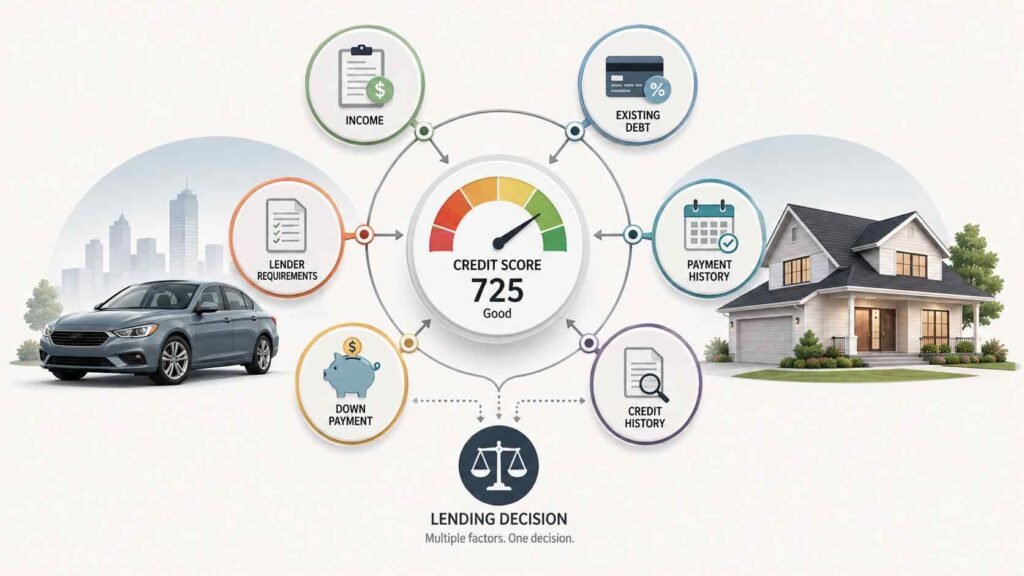
Two borrowers with the same score could receive different offers because their incomes, debt levels, loan amounts, down payments, credit histories, or other circumstances differ.
The same person could also receive different offers from different lenders.
This is particularly important when comparing major loans. A credit score should be treated as one part of the application rather than a guarantee of a particular outcome.
The Bottom Line
So, what is a good credit score? Under the standard FICO scale, 670 to 739 is good, 740 to 799 is very good, and 800 to 850 is exceptional. A score between 580 and 669 is fair, while anything below 580 falls into the poor category.
That gives you a useful framework for understanding your score, but the number should not be viewed in isolation. A 700 is good, a 750 is very good, and a 650 is fair, yet none of those numbers by themselves determines whether you will receive a particular loan or interest rate.
If you are preparing to buy a car or home, the most useful approach is to look at your credit score, credit report, debt, income, down payment, and the specific lender’s requirements together.
This article is provided for general educational and informational purposes only. It is not financial, credit, mortgage, or legal advice, and it does not guarantee approval, interest rates, loan terms, or any particular financial outcome. Credit scoring models and lender requirements can vary, and your individual circumstances may produce a different result. Consider reviewing your credit information and comparing offers from appropriate lenders before making a financial decision.